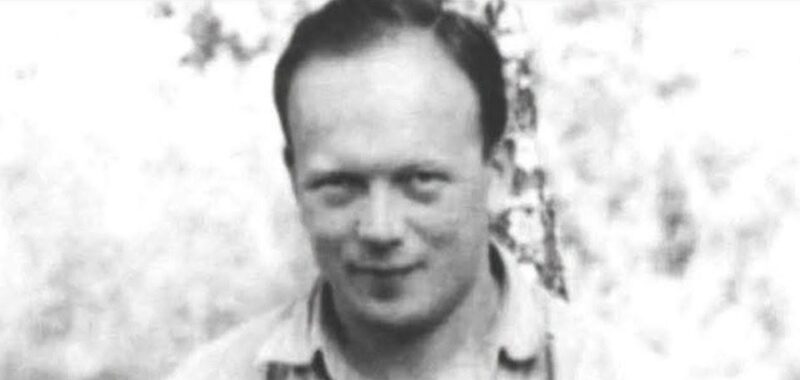
He Invented a Disease That Never Existed — and That Brilliant Lie Saved Nearly 8,000 People from the Nazis
What if the most powerful weapon against an occupying army made no sound, fired no bullets, and existed only on paper?
During the darkest years of the Second World War, a young Polish doctor realized that armed resistance would bring brutal retaliation against innocent families. So instead of fighting with weapons, he created an epidemic that was not real.
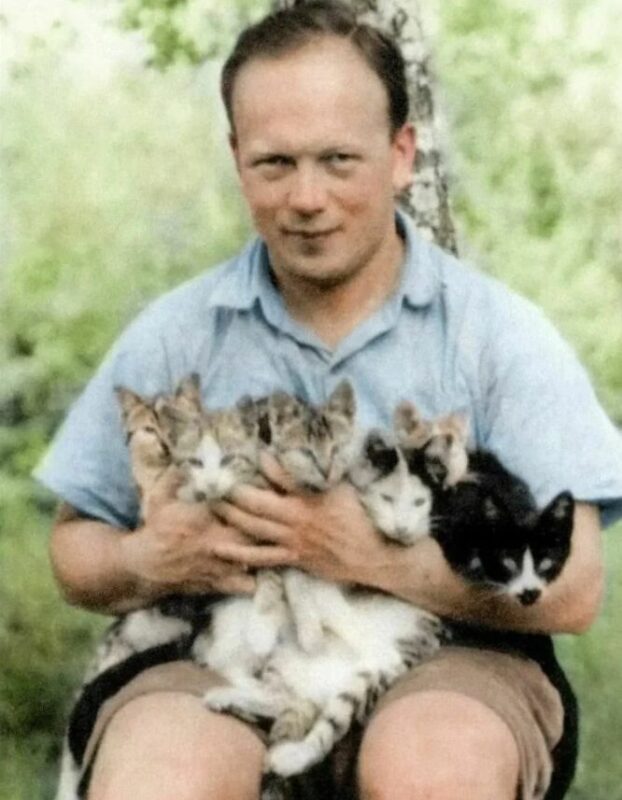
His name was Eugeniusz Łazowski.
When Nazi Germany occupied Poland, Łazowski witnessed arrests, executions, hunger, and deportations. German soldiers entered villages without warning, and entire families could disappear overnight. He wanted to protect the people around him, but he knew that a direct attack could lead to mass punishment.
He needed another kind of defense.
The answer came from one of the German army’s greatest fears: typhus.
German authorities were terrified of the disease because it had killed soldiers during earlier conflicts. Whenever a village appeared infected, the army often imposed quarantine. Patrols became less frequent, officers avoided homes, and deportations could be delayed or stopped.
Łazowski understood that a fake outbreak might create an invisible wall around the community.
He joined forces with another Polish doctor, Stanisław Matulewicz, who had discovered something unusual. German laboratories used the Weil-Felix blood test to detect typhus. Matulewicz found that a harmless bacterium called Proteus OX19 could make the test appear positive.
The patient did not actually become sick.
But the blood sample looked as though the person had typhus.
The doctors immediately understood how powerful this discovery could be.
In 1941, they quietly began their plan. They chose patients who already had mild symptoms such as colds, fever, or influenza. These people were injected with the harmless bacterial preparation, and their blood samples were sent to German-controlled laboratories.
One by one, the results came back positive.
Soon, German authorities believed that typhus was spreading through villages near Rozwadów. The region was placed under quarantine, and soldiers began keeping their distance.
Raids became less common. Forced-labor roundups slowed. Deportations were interrupted.
But creating the epidemic was only the beginning. Łazowski had to keep the illusion alive for years.
He falsified medical records, created believable patterns of infection, and carefully controlled how many cases were reported. Too many positive tests might create suspicion. Too few might convince the Germans that the danger had passed.
The villagers also had to play their part.

When military vehicles approached, adults stayed indoors and pretended to be weak. Children coughed near windows. Families covered themselves with blankets and acted as though fever had taken over their homes.
Every person became part of the deception.
One mistake could cost them everything.
If the Germans discovered the truth, Łazowski, Matulewicz, their patients, and entire families could be executed.
At one point, German medical inspectors became suspicious and arrived to investigate.
Łazowski knew the visit could destroy the operation.
He welcomed the inspectors with food and alcohol, while younger doctors examined the patients. The rooms were dark, the villagers looked exhausted, and the inspectors were too frightened of infection to perform careful examinations.
They collected blood samples and left.
The tests came back positive.
The Germans accepted that the epidemic was real.
For nearly three years, the false outbreak protected several villages. Around 8,000 people benefited from the deception, including Jewish families and civilians who might otherwise have been deported, arrested, or sent to forced-labor camps.
No army defended them.
No battle was fought.
Their protection came from medical knowledge, forged documents, frightened inspectors, and a disease that did not exist.
In 1944, as German forces retreated, the fake epidemic quietly disappeared.
After the war, Łazowski moved to the United States and worked as a doctor and professor. For years, he said little about what he had done. Only later did the world learn how he and Matulewicz had created one of the most unusual resistance operations of the war.
Łazowski never called himself a hero. He said he had simply used his medical knowledge to help people who trusted him.
But his story proves something extraordinary.
Resistance does not always require weapons.
Sometimes courage looks like a falsified medical report.
Sometimes an invisible lie can become a shield.
And sometimes, one brilliant idea can save thousands of lives.
Full story in comments 👇👇
Part 2 — The Secret That Remained Hidden for Decades
When the German army finally withdrew from the region in 1944, the villagers did not celebrate immediately.
For years, they had lived inside a lie so dangerous that even speaking about it felt unsafe.
The medical records still existed. The false test results still carried official stamps. Too many people knew parts of the secret, and no one could be certain who might return or which authorities might begin asking questions.
Łazowski understood that surviving the occupation did not mean the danger had completely disappeared.
He told the villagers to remain silent.
The injections stopped. No new blood samples were sent to the laboratories, and the epidemic that had once seemed to spread across the region slowly vanished from official reports.
To the Germans, it probably appeared that the disease had simply run its natural course.
But for the people who had been protected by it, the silence left behind felt almost unreal.
Soldiers no longer avoided their roads.
Military vehicles no longer turned away from their homes.
Children no longer had to cough on command when strangers appeared.
Families could finally open their doors without pretending that death was waiting inside.
Yet the war had changed everything.
Some homes were empty. Some relatives had disappeared. Nearby communities had suffered terrible losses, and many survivors carried memories they could not explain to anyone outside the villages.
The false epidemic had not ended the war.
It had not stopped the destruction occurring throughout Poland.
But inside the small area protected by Łazowski’s plan, thousands of people had received something incredibly rare during the occupation: time.
Time to remain with their families.
Time to avoid deportation.
Time to survive until the front moved away.
After the war, Łazowski eventually left Poland and began a new life in the United States. There, he continued working in medicine.
To most of the people around him, he appeared to be an ordinary doctor and professor.
His colleagues knew him for his medical experience, not for the extraordinary secret he carried.
For decades, he rarely spoke about the epidemic.
Perhaps silence had become a habit. During the occupation, one careless sentence could have condemned an entire village. Even after the danger had passed, revealing the truth was not simple.
The story also sounded almost impossible.
A doctor had created thousands of false typhus cases without infecting anyone.
German officials had received the test results, declared an epidemic, and unknowingly helped protect the very people they intended to control.
No one had defeated them in battle.
Their own fear had defeated them.
Years passed before Łazowski began speaking publicly about what he and Matulewicz had done.
When people finally heard the full story, many struggled to believe that such an operation had been possible.
But the method had been surprisingly simple.
The real genius was not only in the medical discovery. It was in understanding human behavior.
Łazowski knew that the German authorities trusted their laboratory system.
He knew that military doctors feared infection.
He knew that officials would often avoid direct contact with suspected typhus patients.
Most importantly, he understood that fear could be manipulated just as effectively as weapons or explosives.
The plan worked because every part of it supported the others.
The blood tests seemed authentic.
The patients showed believable symptoms.
The medical records suggested a natural spread of disease.
The villagers knew how to behave.
And the inspectors were too frightened to look closely.
The operation became a rare example of resistance built not on destruction, but on illusion.
Łazowski’s actions also forced people to reconsider what heroism could look like.
Heroes are often imagined carrying weapons, leading armies, or standing openly against an enemy.
Łazowski did none of those things.
He worked quietly in examination rooms.
He filled out forms.
He prepared injections.
He sent blood samples through official channels.
His resistance looked almost like ordinary medical work.
That was exactly why it succeeded.
The occupying authorities never realized that the paperwork they trusted had become a weapon against them.
Łazowski did not seek attention for what he had done. He often emphasized that the operation was possible because of the courage of others as well.
Matulewicz had helped develop the method.
Patients accepted the injections without revealing the secret.
Families followed instructions.
Villagers remained silent even under enormous pressure.
The protection of those communities had been a collective act of courage.
One frightened person could have exposed everyone.
But they trusted one another.
By the time the story became widely known, many of the people involved had grown old. Some had died without ever receiving public recognition.
Still, their actions survived through the people they had helped save.
Children who remained with their parents grew into adults.
Families that might have disappeared continued into new generations.
The impact of the false epidemic did not end when the final test was sent to the laboratory.
It lived on in every life that continued because the Germans had been too frightened to enter those villages.
Łazowski’s story remains powerful because it does not glorify war.
Instead, it reveals how intelligence and compassion can create resistance where violence would only bring more death.
He found a weakness in a brutal system and turned it into protection.
The disease was false.
The medical emergency was invented.
But the lives saved by that deception were completely real.