😱💔 My 82-Year-Old Mother Told the Doctor at the Hospital: “My Husband Hasn’t Allowed Me to Eat Bread or Use Salt for 30 Years. If He Saw Even a Small Piece of Bread in My Hand, He Would Immediately Take It Away.” The Doctor Froze and Asked My Father to Leave the Room… 😱‼️👇
That was the first moment in my life when I was truly afraid of my own father.
My parents had been together for 58 years. To us, they had always been the kind of couple people said:
“Those two simply cannot live without each other.”
My father, George, was 84. My mother, Margaret, was 82.
They still lived in the same small house, sat together in the kitchen every morning, and my father personally prepared most of my mother’s meals.
Growing up, I had always considered all of this perfectly normal.
But that day at the hospital, I began remembering little details I had never paid much attention to before.
My mother never ate bread.
Whenever there was a salt shaker on the table, my father moved it away from her.
During family gatherings, he often said:
“Margaret, that’s not for you.”
Sometimes my mother laughed and said:
“One little piece won’t hurt me.”
My father’s expression immediately became serious.
“No.”
I had always assumed it had something to do with her health.
But then the doctor asked: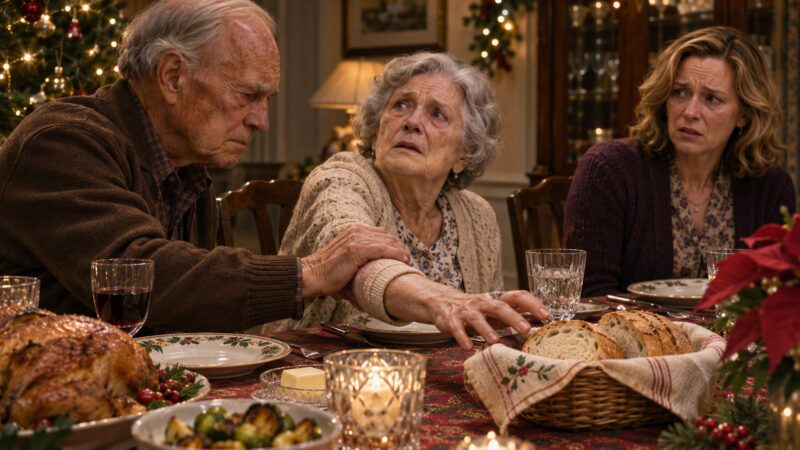
“How long has your husband been deciding what you can and cannot eat?”
My mother answered calmly:
“About thirty years.”
The doctor’s expression changed.
“Did you want to eat bread?”
My mother hesitated.
“Many times.”
“And salt?”
“Yes.”
“And your husband wouldn’t allow it?”
My mother glanced toward the door.
“No.”
A heavy silence filled the room.
The doctor stood up.
“Mr. George, could you please wait outside for a few minutes?”
My father didn’t argue. He simply looked at my mother and then walked out.
I watched him leave, and suddenly old memories began returning to me.
A Christmas dinner fifteen years earlier.
My mother had reached for a piece of fresh bread.
My father had gently but firmly grabbed her wrist and said:
“No.”
I remember being angry with him.
Another time, at a restaurant, my father had asked the waiter to take my mother’s meal back because, according to him:
“There’s too much salt in this.”
My mother looked embarrassed.
Back then, I simply thought my father was overly protective.
Now those same memories seemed completely different.
The doctor continued asking questions.
“Has your husband ever punished you for eating those foods?”
“Punished me? No.”
“Did he get angry?”
My mother gave a faint smile.
“Very.”
I felt something inside me turn cold.
“Mom, why didn’t you ever tell us?”
She looked at me.
“Because I didn’t want to.”
“For thirty years?”
“Yes.”
“Did Dad force you?”
My mother fell silent again.
And somehow, that silence frightened me more than anything she could have said.
I stepped into the hallway.
My father was sitting on a chair with his hands resting on his knees.
“Dad.”
He looked up.
“Why have you forbidden Mom from eating bread or using salt for thirty years?”
He didn’t answer immediately.
“She told you?”
“Yes.”
“And she didn’t tell you anything else?”
My anger grew.
“What else was she supposed to tell me?”
My father nodded slowly.
“I understand.”
His calmness made me even angrier.
“Aren’t you even going to defend yourself?”
He looked at me and said quietly:
“If Margaret has decided not to tell the whole story yet, I won’t tell it for her.”
At that moment, the doctor opened the door.
“Mr. George, please come back inside.”
We all entered the room.
My mother’s eyes were red.
The doctor had placed an old, thick medical folder on the table. My father had brought it with him to the hospital.
“Are these your wife’s old medical records?”
“Yes,” my father replied.
The doctor turned a few pages.
Then he looked at my mother.
“Mrs. Margaret, I think it’s time to tell your daughter the part you’ve left out.”
My mother looked at my father for a long moment.
Then she looked at me.
“Thirty years ago, I almost died.”
Read the continuation in the comments 👇‼️👇‼️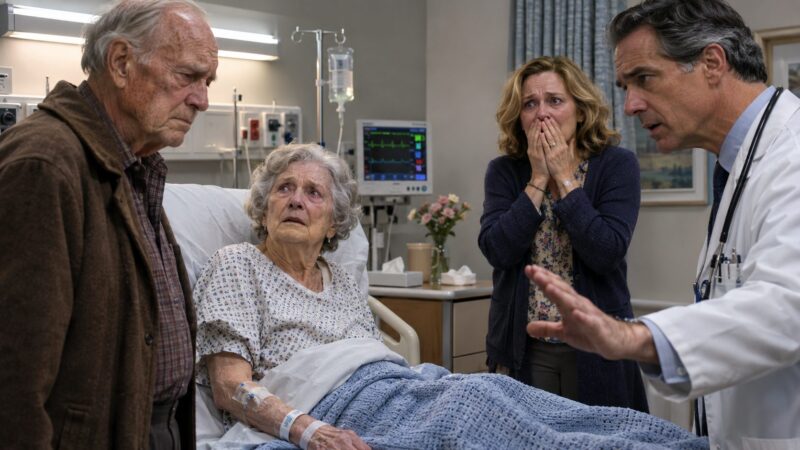
“What are you talking about, Mom?”
My mother took a deep breath.
“You were twenty then, studying at university. We decided not to worry you until everything was over.”
The doctor pulled his chair closer.
“Please continue, Mrs. Margaret.”
“At first, my legs started swelling. Then I had trouble breathing. One night, I collapsed in the kitchen. George called an ambulance.”
My father lowered his head.
“When I woke up, the doctors told me my heart and kidneys were in serious trouble. Dangerous amounts of fluid had accumulated in my body. They prescribed a strict diet, especially limiting salt.”
I turned to the doctor.
“But what about bread? Why couldn’t she eat even one piece?”
The doctor opened the folder.
“Your mother was advised to avoid certain foods containing salt, including some types of bread. But that never meant all bread was forbidden forever.”
My heart pounded.
“So Dad spent thirty years…”
“Wait,” my mother interrupted. “There’s something worse you haven’t heard.”
She turned toward my father.
“George, do you remember that Sunday?”
He closed his eyes.
“Every single day.”
“A few months after leaving the hospital, I felt much better. While George was working, I prepared my favorite dinner. I thought breaking the rules once couldn’t possibly hurt.”
Her voice trembled.
“That night, I ended up in the hospital again. My condition was so serious that the doctors warned George I might not survive.”
I covered my mouth.
“He stayed beside my bed for three nights. When I opened my eyes, he was crying.”
My father wiped his eyes with trembling hands.
“I promised never to ignore medical advice again,” my mother whispered. “And George promised to help me.”
“But Mom, that still doesn’t explain thirty years.”
She nodded.
“Because there’s something even your father doesn’t know.”
George suddenly looked up.
“Margaret?”
“For the past ten years, I’ve sometimes eaten bread secretly. At our neighbor’s house, at family gatherings, whenever you weren’t looking. And I was always afraid to tell you.”
My father stared at her.
“You were afraid of me?”
“Not of you, George. Of your reaction. I knew how terrified you were of losing me.”
The doctor spoke firmly.
“Your wife’s illness was real, but medical restrictions from thirty years ago should not automatically continue for life. Her diet needed regular reassessment. Most importantly, Margaret deserves a voice in decisions about her own health.”
My father remained silent.
Then he took my mother’s hand.
“I thought I was protecting you.”
Tears rolled down her cheeks.
“I know. But sometimes you were so afraid of losing me that you forgot I was still here. I’m alive, George. I have wishes of my own.”
For the first time in my life, I saw my father lower his head before her.
“Forgive me.”
I sat beside them, unable to hold back my tears.
The doctor ordered new tests to determine which restrictions were still necessary.
Two weeks later, after reviewing the results, he explained what my mother could safely eat.
That Sunday, our family gathered at my parents’ house.
On the table sat freshly baked bread, prepared according to her updated dietary recommendations.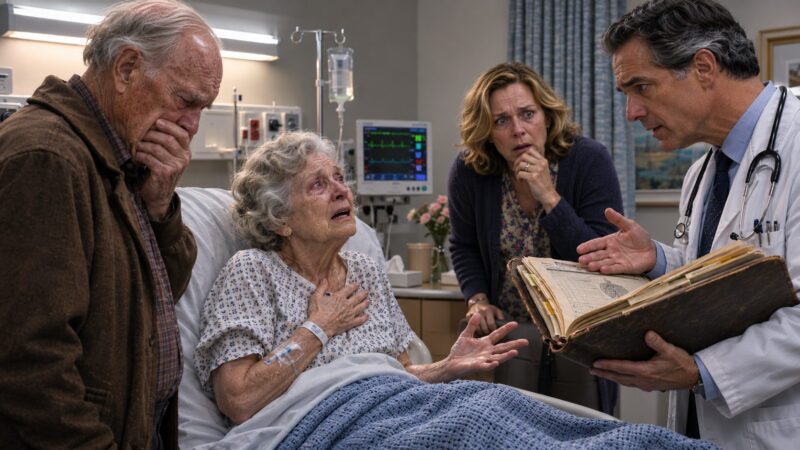
My mother carefully picked up a small piece.
My father instinctively reached toward her.
We all froze.
But he stopped.
Then he smiled, picked up the breadbasket, and moved it closer to her.
“Margaret, would you like another piece?”
My mother stared at him.
Then she laughed through her tears.
“I’ve waited thirty years for you to ask me that.”
My father embraced her.
And I understood something I would never forget.
Sometimes people become so terrified of losing someone they love that their protection turns into control.
But true love isn’t only about protecting someone. It’s also about trusting them, listening to them, and allowing them to live their own life.
That day, my mother didn’t simply eat bread.
For the first time in thirty years, she felt that her voice was finally being heard.