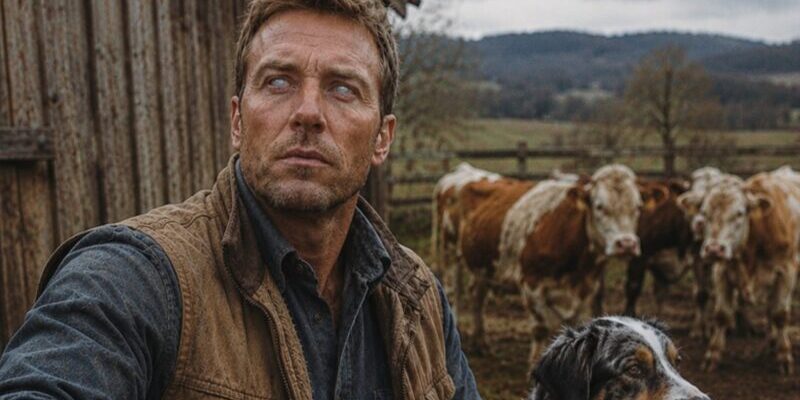
I am forty years old, blind since birth, and I live in a tiny village in Somogy County, Hungary. I am not writing this text — I am speaking it into my phone, because for most of my life, someone was always ready to speak for me.
This morning, I milked three cows by myself, found the calf by the rattle of its chain, fixed the barn door latch, and led the animals out with Bátor, my guide dog.
At the gate, the new neighbor told his wife:
“That man needs a guide himself, let alone keeping cows.”
I did not answer.
Cows do not wait while I explain to strangers that I am not helpless.
My name is Pál.
When I was a child, everyone called me Pali. My mother called me Pál, especially when she was angry.
“Pál, hold the spoon straight.”
“Pál, count your steps.”
“Pál, don’t wave your hands around. Listen first.”
She never raised me like a poor little thing. If I hit my head on a stool, she touched the bump and said:
“You’ll live. Did you remember where the stool is?”
Back then, I wanted pity.
Now I understand: if she had treated me like porcelain, I would have broken.
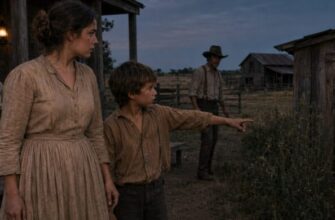
We lived at the edge of the village, in an old house with a barn behind the garden. I never saw the yard, the gate, or the cows, but I knew every sound. I knew which hinge creaked, which board bent under my foot, and when the hay smelled damp.
My father did not know what to do with me at first. He was a quiet man, used to fixing broken things. But I was not something he could repair.
When I was four, he took me into the barn and placed my hand on a cow’s warm side.
“Don’t go behind her,” he said. “She doesn’t know you’re special. She’ll kick you like anyone else.”
That sentence stayed with me.
At school, they called me special too, but it sounded different. They hid my bag and laughed while I searched on the floor. One boy, Sanyi, always laughed through his nose. I learned voices, footsteps, silence.
At home, I cried that I would never go back.
My mother put buttons, beans, coins, and paper clips on the table.
“Sort them,” she said.
“Why?”
“So your fingers learn.”
By fifth grade, I knew the school better than many children who could see. Once, Sanyi hid my bag in the teachers’ room. I found it.
When he denied it, I said:
“He sniffs when he lies.”

The room went silent.
After that, they hid my bag less often.
Not because they became kind.
Because I had learned to find what others thought they could take from me.
When does pity become the same as contempt, if no one ever asks what you are capable of?
THANK YOU FOR READING THIS FAR
The continuation is coming…
💬 👇
THE STORY CONTINUES
…⏬⏬⏬…
Twenty years had passed since the days when people laughed at me for being blind.
I lived alone on the small farm my father had left behind. My mother was gone, and my guide dog, Bátor, had become my closest companion. The cows were healthy, the barn was full of hay, and for the first time in my life, I felt that I had proven everyone wrong.
But some people never change.
One stormy autumn night, rain hammered against the roof while the wind rattled the old windows. Bátor suddenly stood up from his bed and let out a low growl.
Not a bark.
A warning.
I froze and listened.
At first, I heard only the rain.
Then came the sound of the gate opening.
Slowly.
Carefully.
Someone was entering my property.
Then I heard footsteps.
Two men.
One walked heavily. The other dragged one foot slightly across the ground.
My heart tightened.
I knew that sound.
Even after all those years.
Sanyi.
The same boy who had mocked me at school.
The same man who still laughed whenever he saw me in the village.
I quietly stood up and placed a hand on Bátor’s head.
“Wait,” I whispered.
The footsteps moved toward the barn.
Then I heard the barn door creak open.
A few seconds later, one of the cows became restless. Chains rattled. Hooves struck the wooden floor.
Something was wrong.
Very wrong.
I moved toward the window and listened carefully.
“Pour it over there,” one man whispered.
A liquid splashed onto the floor.
The smell reached me immediately.

Gasoline.
My blood ran cold.
They were not there to steal.
They were there to burn everything I owned.
The house.
The barn.
The animals.
My entire life.
For a moment, fear tried to take control.
Then I remembered my father’s words.
“She doesn’t know you’re special. She’ll kick you like anyone else.”
The world had never treated me differently.
Why should I act differently now?
I grabbed my phone and called the emergency services. Then I quietly slipped out through the back door with Bátor beside me.
The men thought darkness protected them.
But darkness had been my home since birth.
As I moved through the rain, I could hear every step they took.
Every breath.
Every whisper.
When I was close enough, I shouted:
“The police are already on their way, Sanyi.”
Everything went silent.
For a second, neither man moved.
“How do you know it’s me?” Sanyi yelled.
I laughed.
“The same way I always knew.”
His breathing changed instantly.
Panic.
The two men ran.
But the muddy ground slowed them down. One slipped and crashed into the fence. Minutes later, police sirens echoed across the fields.
They were caught before they could leave the village.
The investigation revealed something shocking.
Sanyi had been drowning in debt. He believed that if my farm burned down, he could buy the land cheaply through a relative and make a fortune.
Instead, he lost everything.
A year later, he was sentenced for attempted arson and animal cruelty.
The day the verdict was announced, many villagers came to see me.
Some apologized.
Some avoided my voice.
Some simply stood there in silence.
The new neighbor who once said I needed a guide just to keep cows shook my hand and said:
“I was wrong about you, Pál.”
I smiled.

“No,” I replied. “You were wrong about blindness.”
Today I am forty years old.
I still milk my cows every morning.
I still walk the same paths.
I still listen more than I speak.
And every time someone pities me before they know me, I remember my mother.
“If you learn where the stool is, you won’t keep hitting it.”
People often think blindness is darkness.
For me, blindness taught me something far more valuable.
How to see people for who they truly are.
And in the end, that turned out to be the clearest vision of all.