
💔 For 43 Years, My Father Took My Mother’s Entire Salary. When She Finally Demanded Her Money Back, He Placed an Old Box on the Table and Said, “Once You Open This, You’ll Never Look at Me the Same Way Again.” 🥺👇
Our neighbors always believed my father was a cruel, heartless man. To be honest, for many years, I believed it too.
He rarely smiled, spoke in short, stern sentences, and looked so cold in family photographs that people often asked my mother:
“Margaret, are you really happy with Robert?”
My mother always gave the same answer:
“If you want to understand Robert, don’t look at his face.”
But nobody understood what she meant.
My mother worked in a small clothing factory for more than forty years. Every Friday, she received her paycheck, came home, and placed the sealed envelope in front of my father.
He opened it, counted the money, and took it into their bedroom. My mother was left with almost nothing.
I first noticed this when I was twelve.
One day, my mother spotted a beautiful blue coat in a shop window. She stood there for a long time, smiling faintly.
Winters in our town were bitterly cold, and her old coat was completely worn out.
“Buy it, Mom,” I said. “You worked all week to earn that money.”
My mother remained silent.
When we got home, she cautiously asked my father:
“Robert, could I keep a little of my salary this month? I need a new coat.”
My father didn’t even look up.
“Not this month.”
“But my old one is torn.”
“I said no.”
My mother didn’t say another word.
That night, I cried into my pillow. I felt as though my father treated my mother like a servant.
She worked from morning until evening but had no right to spend her own money.
Over the years, similar incidents became more frequent.
My mother wanted to go to the seaside with her sister, but my father refused.
She wanted to replace our old kitchen table, but he said there was no money.
Even when my mother bought herself a pair of shoes for her birthday, my father took the receipt and stared at her silently for a long time.
My aunt Susan witnessed that scene.
“Margaret, this isn’t normal,” she said after my father left the room. “You work, but Robert controls your entire life.”
My mother merely whispered:
“Nothing is what it seems.”
I became furious.
“Then what’s the truth? He takes your entire salary and doesn’t even tell you what he spends it on!”
My mother glanced toward the closed bedroom door.
“One day you’ll understand, Emily.”
When I got married and moved away, I called my mother every week.
Several times, I offered to help her open a separate bank account, but she refused.
I began to believe she was simply afraid of my father.
The years passed.
My father retired, but that strange habit continued.
Every month, my mother placed an envelope containing her wages or pension in front of him.
He took it and kept it in an old metal box.
Nobody knew what was inside.
Once, I even tried to open the box, but my father grabbed my hand.
“Never go near that box again,” he said sternly.
At that moment, I became completely convinced he was hiding something.
Perhaps he had spent all my mother’s money over the years.
Perhaps he had enormous debts.
Or perhaps he was secretly leading a second life we knew nothing about.
Once, I even asked my mother whether my father had another family.
She looked at me so strangely that I immediately regretted asking.
“Emily, your father has done things you can’t even imagine.”
“Then why won’t you tell me?”
“Because I made a promise.”
“To whom?”
She remained silent for a long moment.
“To your father.”
After that conversation, I never brought up the subject again, but I never forgot it.
Everything changed on my parents’ fiftieth wedding anniversary.
Our entire family gathered at their house.
My husband, our two children, Aunt Susan, several close relatives, and I were sitting in the living room.
My daughter Lily suggested taking a family photograph.
My mother sat beside my father on the sofa.
As always, my father wore a serious expression, while my mother held his arm tightly.
After the photograph was taken, my mother suddenly said:
“Robert, it’s time.”
Silence fell over the room.
My father looked at her for a long moment, then slowly nodded.
“Are you sure?”
“Fifty years is enough. Our children deserve to know the truth.”
Read the rest of the story in the comments 👇‼️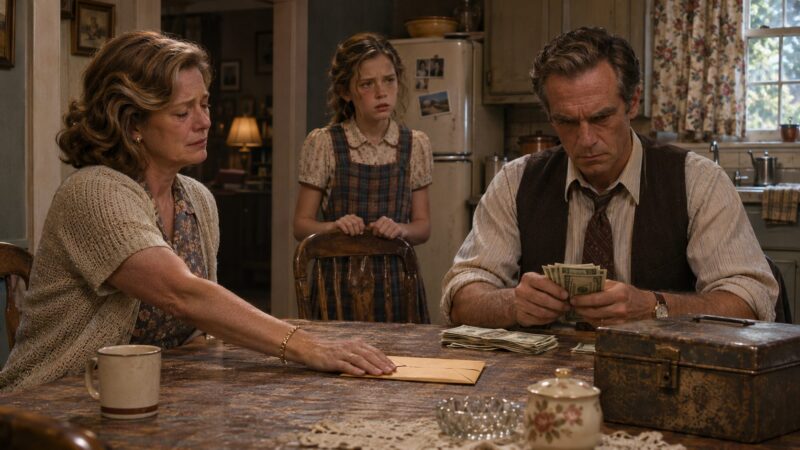
My heart began pounding.
“What truth, Mom?”
She didn’t answer.
My father disappeared into the bedroom and returned carrying the same old metal box.
He placed it on the table and handed my mother a small key.
“You open it.”
Her hands trembled.
“Margaret, what’s going on?” Aunt Susan asked.
My mother looked at my father, tears filling her eyes.
“Robert, you can still change your mind.”
“No. We promised there would be no more secrets.”
I couldn’t contain myself.
“Enough! You’ve taken Mom’s salary for forty-three years! She couldn’t even buy herself a coat! Where did all that money go?”
My father looked at me with unexpected sadness.
“Emily, do you truly believe I kept that money for myself?”
“What else am I supposed to believe?”
“Then look inside.”
My mother unlocked the box.
At the very top lay a tiny red child’s shoe.
Just one.
I picked it up.
“Whose shoe is this?”
My mother burst into tears.
“Yours,” my father whispered.
I stared at him.
“Why have you kept it?”
“Because it reminds us of the day we nearly lost you.”
When I was three, doctors discovered a serious heart condition. I needed expensive treatment, and my parents couldn’t afford it.
They sold nearly everything they owned, but it wasn’t enough.
“I borrowed a tremendous amount of money,” my father explained. “We spent years paying it back.”
“So that’s where Mom’s salary went?”
“At first, yes.”
“At first? What happened afterward?”
My mother took a bank statement from the box.
“The debt was paid off twenty-two years ago.”
I felt my anger returning.
“Then why did you keep taking her money?”
“Because we made another decision,” my mother answered. “We continued saving it, this time for you and eventually your children.”
I stared at them.
“But I was grown up! You could have enjoyed your lives!”
“We wanted you to have the security we never had.”
My father pulled out another document.
I recognized the address immediately.
It was my house.
“Why do you have this?”
“Remember fifteen years ago, when your husband lost his job and you nearly lost your home?”
I nodded.
One morning, the bank had unexpectedly informed us that a substantial portion of our mortgage had been paid.
We never discovered who was responsible.
“It was me,” my father said.
I couldn’t breathe.
“You?”
“Your mother told me you’d cried all night. I couldn’t let my daughter and grandchildren lose their home.”
“Why didn’t you tell me?”
“Because I never wanted you to feel indebted to me.”
Tears rolled down my cheeks.
But one question remained.
“Mom, why did you agree to sacrifice everything?”
“Because we made those decisions together. But I made a mistake, Emily. I allowed you to misunderstand your father for years.”
I turned toward him.
“What about the blue coat? You refused to let her buy it.”
My father closed his eyes.
“I remember. And I regret it. I was terrified we wouldn’t make the next payment. But that never justified treating her so harshly.”
My mother placed her hand on his shoulder.
“You bought me a coat afterward, Robert.”
“Three years afterward,” he whispered. “Three whole years.”
For the first time, I understood that my parents’ marriage had been shaped by sacrifice, fear, love, and painful mistakes.
“I tried to be a good father,” Robert said. “But I wasn’t always a good husband.”
Then my mother showed me a small handwritten note.
“When Emily grows up, may she never have to choose between her child’s health and keeping a roof over her family’s head.”
Both my parents had signed it.
I embraced my father, sobbing.
“Forgive me, Dad.”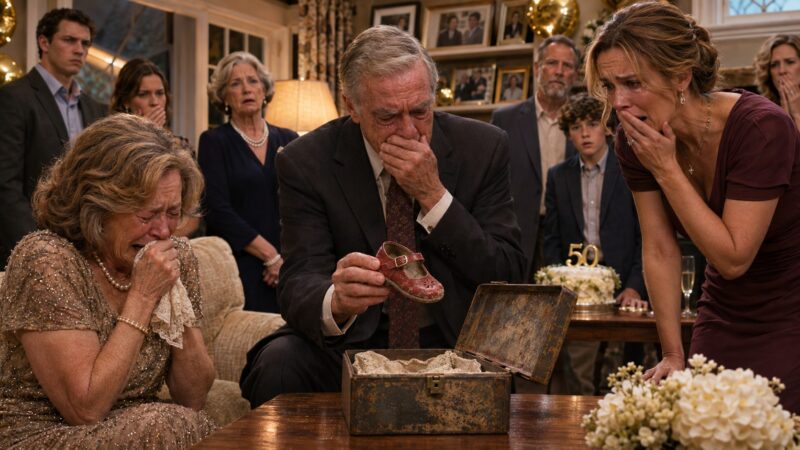
“There’s nothing to forgive. I never gave you the chance to understand.”
That evening, I asked my mother what she wanted to do with the money they had saved.
She smiled.
“I’ve always dreamed of visiting the seaside with Susan.”
The following week, my father bought them two tickets.
When they returned, he met my mother at the airport holding a beautiful blue coat.
She laughed through her tears.
“Robert, I don’t need another coat now.”
He smiled more warmly than I’d ever seen.
“I know, Margaret. But this time, I want you to have something simply because you like it.”
And I finally understood something.
Sometimes we spend years misunderstanding those closest to us. But even loving intentions cannot excuse every mistake.
If I could go back, I would tell my father just one thing:
“Dad, we could have faced those difficulties together. You didn’t have to carry everything alone.”
And I know what he’d say.
“I know, sweetheart. I know that now.”